Skip to content
Montana off-road riding terrain. Backdrop for the Off Road Hubs Montana parks directory

Off-Road Parks · Montana

Off-Road Parks in Montana

Ride 25 parks across Montana. Maps, hours, contact info, photos, and verified operator profiles, all in one place.

Big Sky country. Glacier, the Bob, and the Yellowstone headwaters.

Updated

On the map

Off-road parks, trails and camping in Montana

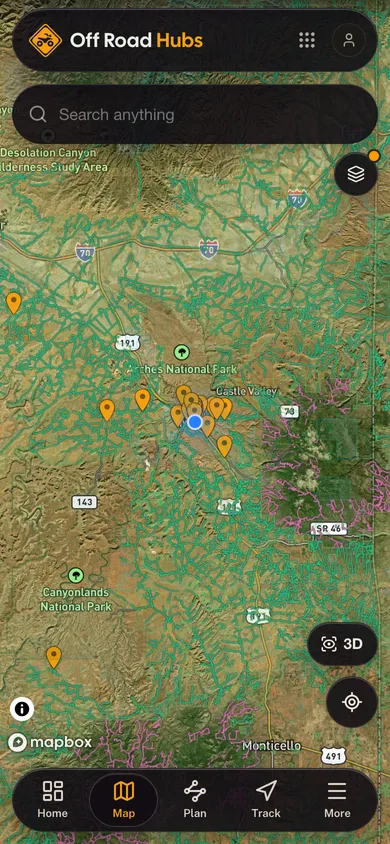
Everything we have mapped in Montana, on one map. Tap anything for its details.

Loads the full map of Montana. We leave it off by default so the page opens fast on mobile data.

  • Details
  • Details
  • Details
  • Details
  • Details
  • Details
  • Details
  • Details

About Montana

Montana splits in two for riders: Rocky Mountain country in the west, open plains rolling east. The mountain half holds most of the trail miles: the Lolo, Flathead, and Bitterroot National Forests thread OHV routes up switchback climbs, along old forest roads, and out to ridgelines where the view runs for fifty miles. One day you're in dark timber, the next in an open meadow or high-desert scrub, and the trail character changes with the country.

West of the Continental Divide is where the network gets dense. Missoula, Hamilton, and Kalispell all work as staging towns for trails into the Bitterroot Range, the Mission Mountains, and the Cabinets. Many of these routes follow old logging grades and mining paths, so you're riding history as much as terrain. Expect real elevation gain, rock gardens, and the occasional creek crossing, this is country that rewards a capable machine and a rider who knows what it can do.

Central and eastern Montana ride differently. Dedicated OHV parks thin out, but BLM and state lands open up less technical, wide-open terrain: long views across prairie and foothills, dust in August, gumbo mud after rain. If the western singletrack grind wears on you, the east trades technical challenge for space and silence. Out here you can ride an afternoon and not see another machine.

The trade-off for all that country is homework. Many trails are multi-use (hikers, mountain bikers, horse packers share them), so ride like a guest. Snowpack, spring thaw, and fire danger close routes on their own schedule, and the closure list changes fast; confirm trail status before you load the trailer. Stay on the marked route, give wildlife room, and the access stays open for the next rider.

When to ride in Montana

Peak Jun–Sep

Full season

Quick facts

Trails mapped
1,387
Parks listed
25
Best season
June through October

Trip guide

Know before you go in Montana

Federal permits, lotteries and timed-entry reservations in Montana, from Recreation.gov.

Confirm current requirements with the agency that sets them before your trip. Rules and fees change every season.

  • OHV Registration

    All off-highway vehicles (OHVs) operated on public land or roads in Montana must be registered. Non-residents must obtain an annual Nonresident Temporary-Use Permit, the 2-year pass is the resident trail pass, which aids in trail maintenance and access.

  • Spark Arrestor Requirement

    Every OHV operating in Montana must be equipped with a U.S. Forest Service-approved spark arrestor that is in good working order. This is a critical fire prevention measure, especially during dry seasons.

  • Youth Operator Age Restrictions

    Children under 12 years of age are generally prohibited from operating an OHV on public lands unless under direct adult supervision and operating on private land or designated riding areas. Specific age and education requirements may apply; verify with the state agency.

  • Designated Trail Use

    OHVs are restricted to marked and designated trails or routes on public lands. Off-trail riding is illegal and strictly enforced to protect natural resources and wildlife habitats. Always stay on the trail.

01Are non-resident OHV permits required in Montana?
Yes. If you're riding public lands or roads in Montana from out of state, you need the annual Nonresident Temporary-Use Permit, displayed on the machine. The money goes back into trail maintenance and development.
02What types of OHV terrain can I expect in Montana?
Two very different states in one. Western Montana rides mountainous: rock, timber, big elevation swings. Central and eastern Montana open into rolling hills and plains, mostly dirt and gravel routes with room to run.
03Are there age restrictions for OHV operators in Montana?
Yes. Kids under 12 generally can't operate an OHV on public lands without direct adult supervision, and additional age, supervision, and safety-education rules can apply. Check the current requirements with Montana Fish, Wildlife & Parks before you go.
04Are spark arrestors required on OHVs in Montana?
Yes, no exceptions. Every OHV in Montana needs a U.S. Forest Service-approved spark arrestor in good working condition. In a state that burns the way this one can, it's the rule everyone takes seriously.
05Can I ride my OHV anywhere on public land in Montana?
No. Public-land riding is limited to designated, marked trails and routes, and off-trail travel is enforced, it tears up ground and habitat that don't recover fast at this latitude. Ride to the current map and the signage.
06What are common reasons for seasonal trail closures?
Three big ones: snowpack in winter, mud during spring thaw (when tires do lasting damage to soft trails), and fire danger through the dry months. Closures shift with conditions, so check trail status right before you head out.