Best Of
The best off-road gear, ranked
Honest, tier-by-tier rankings (from budget to premium) so you can spend wisely whatever your budget. Updated for 2026.

Recovery Straps & Kits
A recovery strap or kinetic rope is the single most important piece of off-road gear you'll hopefully never need to use. When your 4x4, UTV, or overlanding rig is buried to the axles in mud, sand, or snow, the right strap turns a stranded afternoon into a five-minute pull, and the wrong one can launch a steel shackle through a windshield. The category splits into two fundamentally different tools that off-roaders routinely confuse: low-stretch tow/recovery straps (and tree-trunk protectors) for slow, static drags and winch rigging, and high-stretch kinetic recovery ropes that stretch 20–30% to store and release energy like a giant rubber band, freeing a stuck vehicle with momentum instead of brute jerking.

Winches
A winch is the one recovery tool that turns a trip-ending stuck into a ten-minute inconvenience. Unlike traction boards or a buddy with a strap, a properly sized winch lets you self-recover when you're alone on a remote trail, axle-deep in mud, or nosed into a ledge with no one behind you. But the market is genuinely confusing: a 12,000-lb winch at Harbor Freight costs a quarter of what a Warn Zeon Platinum does, and Amazon's listings do almost nothing to explain why, or whether the cheaper one is fine for how you actually wheel.

Traction Boards
Traction boards are the single most-used recovery tool in off-roading: cheaper than a winch, faster than digging, and useful solo when there's no second rig and no anchor in sight. You wedge a pair under the spinning tires, ease onto the throttle, and the molded lugs bite into sand, mud, or snow long enough to float the vehicle back to firm ground. For 4x4s airing down on a beach, UTVs crossing a wash, or fully-loaded overland rigs sinking into a two-track, a good set turns a winch-or-walk situation into a five-minute self-recovery.

Off-Road Tires
Tires are the single most consequential upgrade you can make to a 4x4, UTV, or overlanding rig, they're the only thing touching the ground, and they decide whether a trail is an adventure or a recovery. Yet the buying experience is genuinely confusing: a search on a big retail site throws hundreds of sizes at you with no sense of which models are actually trail-proven, where the price-to-performance sweet spot sits, or what you give up when you save money. The gap between a $170 all-terrain and a $450 hybrid is real, but it isn't linear, and it isn't always in the direction the price tag suggests.

Light Bars
A light bar is the single biggest visual upgrade you can bolt to a 4x4, UTV, or overland rig, and the one most likely to disappoint if you buy on lumen claims alone. The real story off-road is beam shape, optical quality, and thermal management, not the inflated lumen figures stamped on the box. A $70 bar and a $1,600 bar can both read "30,000 lumens," but on a dark two-track the cheap one throws a foggy wall of glare that washes out at 150 feet, while the premium unit punches a clean, controlled beam a quarter-mile downrange with a usable spread in your peripheral vision. That gap is what this guide exists to map.

Air Compressors
Airing down is half the fun of going off-pavement: soft tires float over sand, claw up rock, and soak up washboard. But what goes down must come back up, and a 50-mile highway run on 12 psi is how you cook a sidewall. A capable air compressor is the single most-used recovery tool most overlanders own, earning its keep at the trailhead every single trip while the winch and traction boards stay bolted down for years at a time. The right one turns a 20-minute, four-tire chore into a five-minute stretch-your-legs break; the wrong one overheats halfway through your second 35" tire and leaves you waiting on a thermal cutoff.

Skid Plates
Underbody armor is the cheapest insurance you can bolt to a 4x4, UTV, or overland rig, right up until the moment a hidden rock punches a hole in your oil pan ten miles from pavement and turns a fun weekend into a recovery operation. Factory skid plates, when they exist at all, are usually thin stamped steel or plastic splash shields meant to deflect highway debris, not survive a high-centering on granite. A purpose-built aftermarket skid plate or full belly system protects the components that actually end a trip: the engine sump, transmission, transfer case, fuel tank, and front differential.

Rooftop Tents
A rooftop tent turns a capable rig into a basecamp you can pitch in the time it takes to unclip a few latches, which is exactly why they have taken over the overland world. For off-road drivers, though, that convenience carries trade-offs the Amazon listing never mentions. Weight sits high on your roof and changes how the truck leans on off-camber trails. Closed height drives wind noise and fuel economy on the highway. Dynamic and static load ratings decide whether your rack can carry the tent at all.

GMRS Radios
GMRS has quietly become the default trail radio for off-road drivers. It is louder and longer-legged than the old FRS bubble-pack walkie-talkies, it runs on real external antennas, and a single $35 license from the FCC covers your whole family for ten years with no test to pass. For a convoy of 4x4s, a UTV pack, or an overlanding rig headed somewhere with no cell bars, it is the simplest way to keep everyone talking.

Awnings
An awning is the piece of overlanding kit you touch every single day in camp, yet the way it gets sold makes it nearly impossible to tell a $150 roof strip from a $2,000 freestanding wing. This guide covers shade built for the demands of off-road travel: 4x4 rigs, UTVs, and overlanding trucks that pound washboard roads all day and then park in exposed desert or coastal wind.

Shocks
Shocks are the single most consequential upgrade for how a 4x4, UTV, or overland rig actually behaves in the dirt. Springs set your ride height and carry the load, but the shocks control everything that happens after a tire hits a rock, a whoop, or a washboard: how fast the suspension compresses, how it settles back, and whether the whole vehicle stays composed at speed instead of pitching and wallowing. A worn factory shock overheats and fades within a few miles of rough trail, which is why a rig that felt fine in the driveway can feel dangerous by mid-afternoon.

Recovery Jacks
A recovery jack is the tool you reach for when a tire is buried to the hub, a rock has you high-centered, or you need to swap a wheel on a slope miles from pavement. The scissor jack in your trunk is useless out there. It sinks in sand, tips on uneven ground, and rarely reaches high enough to clear a 35-inch tire. Off-road drivers need a jack built for terrain, height, and abuse.
Some links are affiliate links, and we may earn a commission at no extra cost to you. It never affects our rankings.
Free tools
More free tools to explore
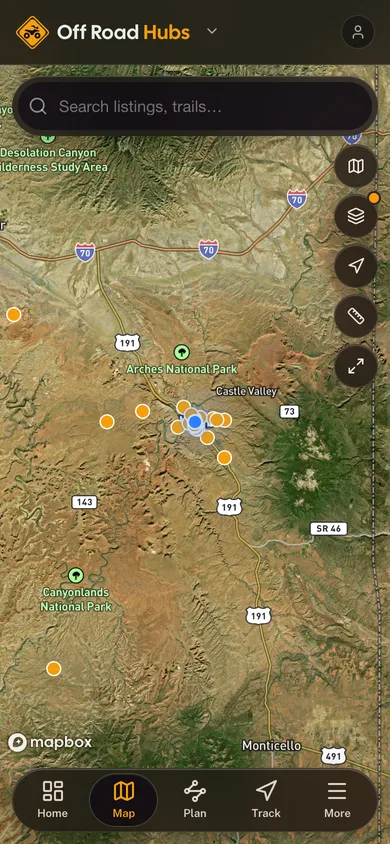
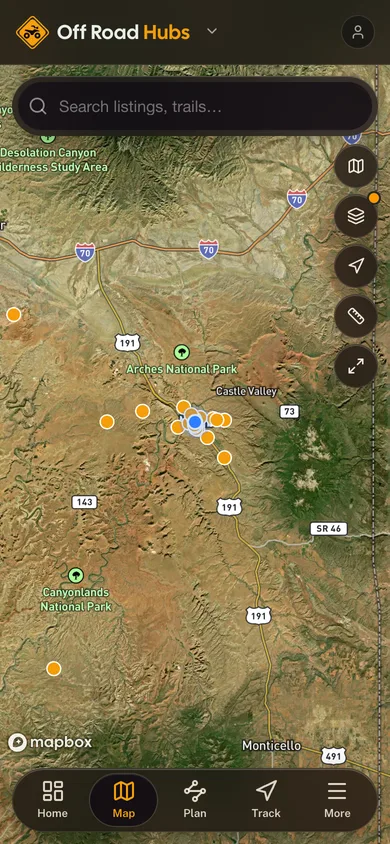
Everything Map
Every place we have mapped, on one screen.
Open Everything MapTrail Explorer
Browse community-sourced trails with maps and details.
Open Trail ExplorerRoute Planner
Map a route or browse routes the community has shared.
Open Route PlannerOff-Road Clubs
Find off-road clubs near you, or start your own with friends.
Open Off-Road Clubs