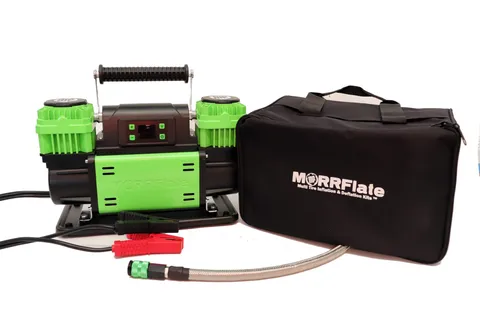
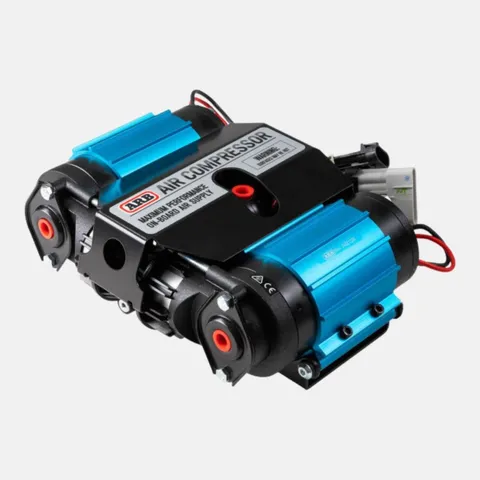
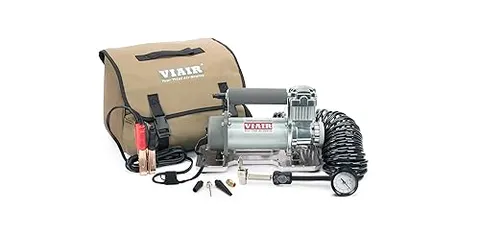
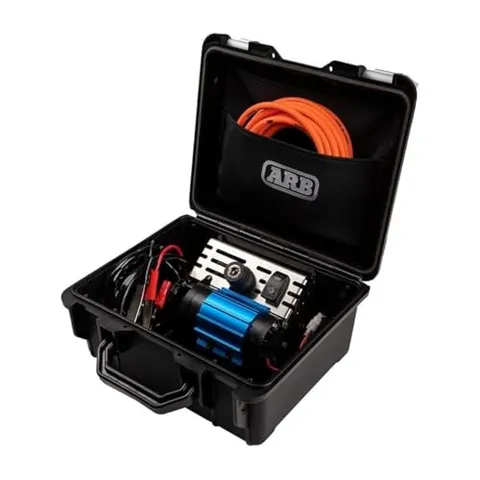
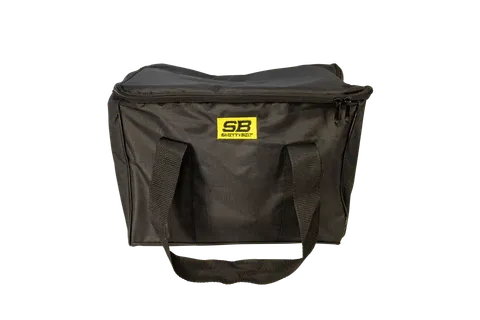
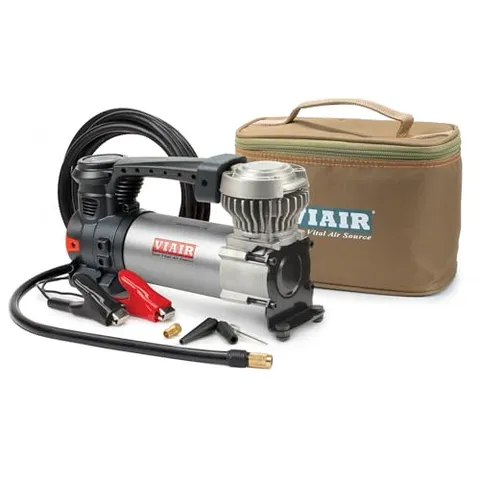
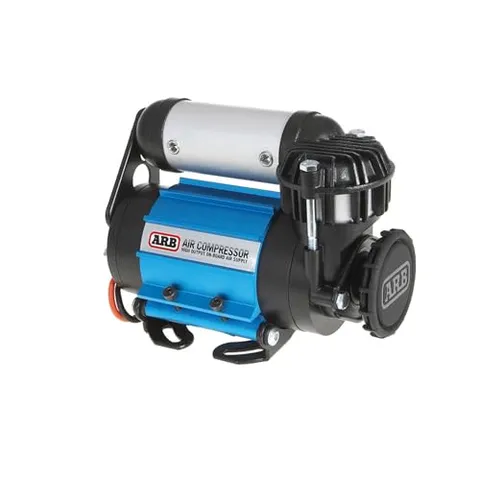
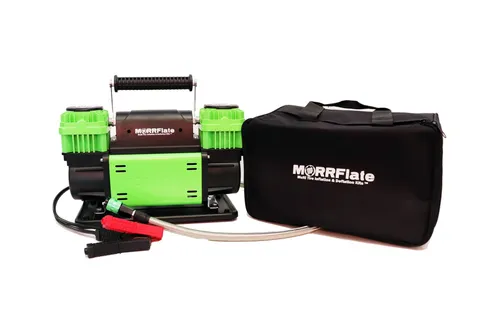
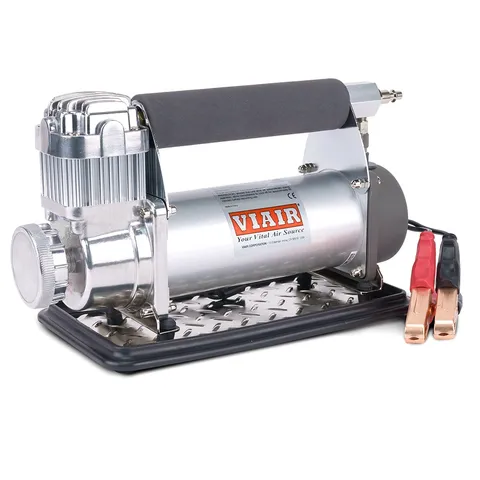
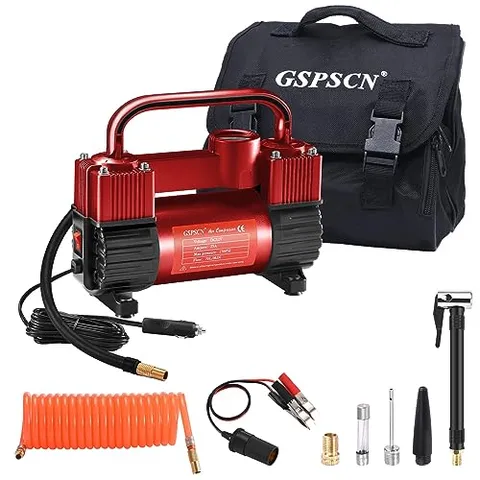
Airing down is half the fun of going off-pavement: soft tires float over sand, claw up rock, and soak up washboard. But what goes down must come back up, and a 50-mile highway run on 12 psi is how you cook a sidewall. A capable air compressor is the single most-used recovery tool most overlanders own, earning its keep at the trailhead every single trip while the winch and traction boards stay bolted down for years at a time. The right one turns a 20-minute, four-tire chore into a five-minute stretch-your-legs break; the wrong one overheats halfway through your second 35" tire and leaves you waiting on a thermal cutoff.
The two numbers that actually matter are CFM (how fast it moves air) and duty cycle (how long it can run before it has to cool down). Marketing loves to quote CFM "at 0 psi", an empty-tire figure you'll never see in the real world, so we weighted sustained output at 30–40 psi and real-world fill times on big tires far more heavily. The rest of the decision comes down to format: a portable you toss in a bin and share between vehicles, or a hard-mounted on-board system that also feeds air lockers, air horns, and impact tools.
This guide spans the full market, from a sub-$70 dual-cylinder you can keep in the trunk "just in case" to a $650 twin-motor on-board setup that runs lockers and airs up a full-size truck without breaking a sweat. We focused on rigs running 31"–37" tires (the meat of the 4x4, UTV, and overlanding world), and called out honestly where a cheap unit is genuinely good enough and where the money buys you speed, duty cycle, and longevity you'll actually feel.