Picking your first off-road vehicle is one of the biggest decisions a new OHV enthusiast makes, and it's easy to see why confusion wins, starting with the names. "UTV" (utility terrain vehicle) and "side-by-side" (SxS) are two words for the same class of machine: a sit-in cabin with side-by-side seats, a steering wheel, and a roll cage. "Side-by-side" describes the seating layout; "UTV" is the umbrella term. Your RZR, Talon, or Maverick is both a UTV and a SxS, there is no separate "UTV vs SxS" distinction to agonize over.
The choice that actually matters is what kind of side-by-side you buy, and whether a side-by-side is the right tool at all versus a Jeep. Side-by-sides split into two families, sport and utility, that ride and price very differently, while a Jeep offers an accessible entry point because you're inheriting decades of proven automotive engineering. The right choice depends entirely on where you want to ride, how much you're prepared to spend, and whether your focus is comfortable exploration or technical performance.
Understanding the Three Platforms
Each platform serves a distinct purpose on the trail. Two of them are side-by-sides; the third is a production SUV.
| Utility SxS | Sport SxS | Jeep Wrangler | |
|---|---|---|---|
| Examples | Polaris Ranger, Can-Am Defender | RZR Pro R, Maverick R, Honda Talon | Sport, Rubicon trims |
| Weight | 1,200–2,000 lbs | 1,500–2,000 lbs | 4,000–4,500 lbs |
| Power | 40–110 hp | ~135–240 hp in current trims | 270–470 hp |
| Street legal | Rarely | Rarely | Yes |
| Getting there | Trailer | Trailer | Drives itself |
| Skill floor | Low | High | Low-moderate |
| Best at | All-day exploration, cargo, passengers | Speed, dunes, technical single-track | Road trips with off-road sections |
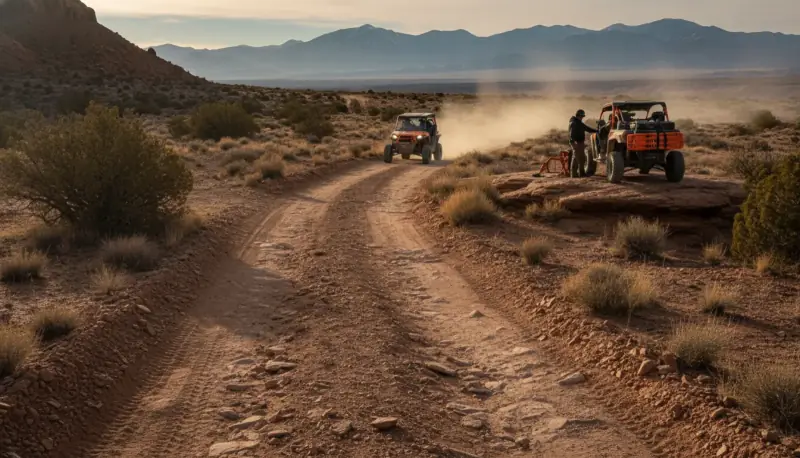
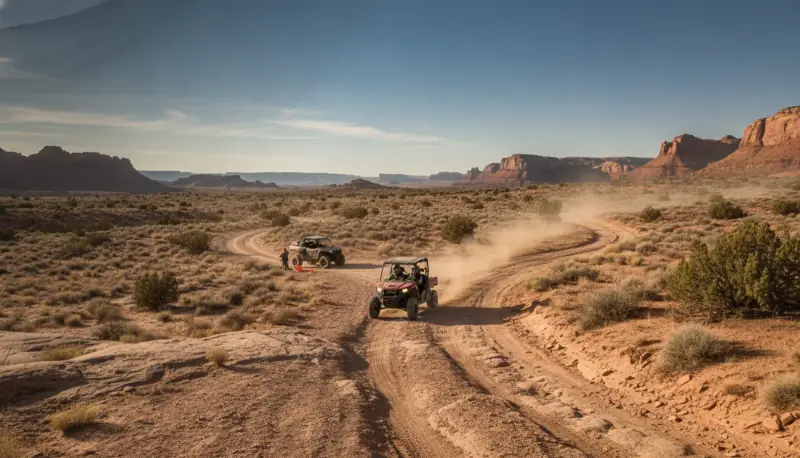
Utility side-by-sides, the Polaris Ranger and its peers, are purpose-built cabins designed for work and exploration: bench or bucket seating for two to six, automatic CVT transmissions on most models, and a cargo bed. They excel at sustained off-road travel across desert, forest, and rocky terrain where ground clearance, throttle control, payload, and stability matter more than cornering speed.
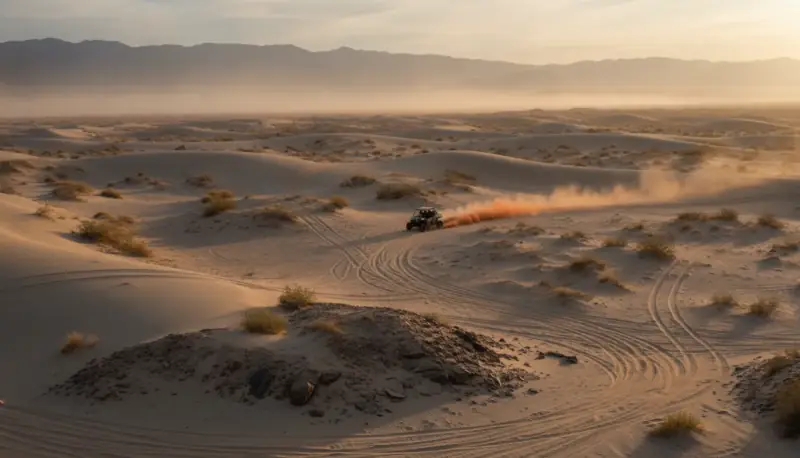
Sport side-by-sides (the Polaris RZR, Honda Talon, and Can-Am Maverick), are the performance branch of the same family, with long-travel race-bred suspension and serious power: current sport machines span roughly 135 horsepower in entry turbo trims to 240 in the turbocharged Can-Am Maverick R, with the naturally aspirated Polaris RZR Pro R at 225. They're built for technical single-track and high-speed dune and desert running.
Jeeps, by contrast, are production vehicles repurposed for off-road use. They offer familiar road controls, street-legal drivetrains, and a massive used market that keeps entry cost low.
Utility Side-by-Sides: Comfort Meets Versatility
Utility side-by-sides dominate first-time buyer choices because they balance comfort, capability, and cost better than competitors.
The core advantage is sustained comfort over long distances. Many models include enclosed or sealable cabins, radio systems, and seating for multiple passengers, which matters when you're heading into high desert or remote forest for eight hours. The automatic CVT means no clutch modulation on rocks or sand; you dial throttle and let the transmission handle ratios. That alone lowers the barrier for riders new to technical driving.
Ground clearance is generous (10–13 inches on mid-range models), and the platform forgives mistakes. The trade-offs: weight and width mean trailered transport for most destinations, most models aren't street-legal, and they're louder and taller-rolling than a Jeep. For beginners seeking wilderness access without rock-crawling intensity, a utility SxS is the gateway machine.
Sport Side-by-Sides: Speed and Technical Terrain
Sport side-by-sides answer one specific question: "I want to go fast on tight, rocky trails and open dunes with other aggressive riders."
A sport SxS feels like a go-kart with race suspension. The cabin sits low and you're strapped close to the action, which heightens trail feedback and positions your body for load transfers through corners. Throttle response is immediate, the suspension is tuned for impact absorption at speed, and top trims add power steering, adjustable damping, and the horsepower to use them.
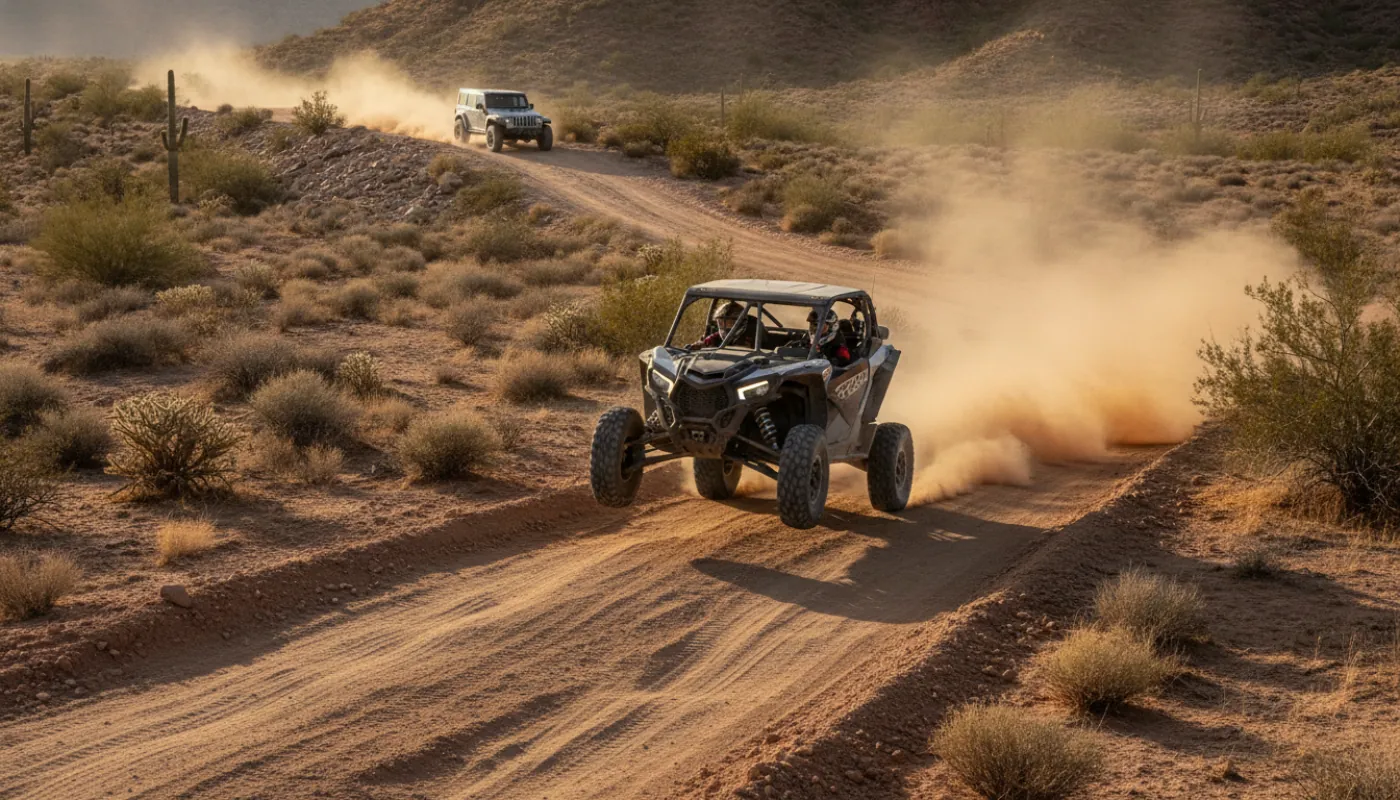
The drawbacks are steep. A sport SxS demands advanced riding skills: tight throttle control, weight management, and dynamic line choice are not optional, and mistakes punish harder than they do in a slower utility machine. The aggressive gearing and stiff suspension make them impractical for casual family cruising or hauling, and the flagship machines command flagship money: the 200-plus-horsepower class starts around $25,000 and the Pro R / Maverick R tier runs well past $40,000. For beginners, a sport SxS is the "advanced purchase", know your terrain and your training timeline before committing.
Jeeps: Familiarity and Road Legality
Jeeps occupy a special niche: street-legal production vehicles that go off-road as a secondary capability.
The huge advantage is familiarity. A Jeep Wrangler drives on roads and freeways like any SUV, which lets you focus on line choice and terrain reading rather than wrestling an unfamiliar machine. The used market is liquid and cheap at the entry: an older JK-generation Wrangler in good shape trades in the $12,000–$20,000 range (earlier examples run under $10,000), holds resale well, and, unlike any side-by-side, drives itself to the trailhead.
Out of the box, a stock Wrangler offers 9–10 inches of ground clearance, respectable, but less than purpose-built platforms. Stock Wranglers work well on desert fire roads and maintained dirt; true technical rock crawling demands aftermarket investment. Budget $5,000–$15,000 for the classic progression of lift, armor, tires, and locking differentials, and treat exotic upgrades like portal axles as their own five-figure line item, not part of the starter budget. The ride is harsher than a UTV cabin, and maintaining a street-oriented vehicle through off-road abuse costs more than accepting wear on a purpose-built machine.
Choosing Your First Rig: A Buyer's Framework
The right vehicle depends on three questions: where will you actually ride in month one, what's your budget, and how much learning time are you willing to invest?
- For desert exploration and long-distance cruising: a utility side-by-side wins decisively. You'll cover 50–100 miles a day comfortably, bring a passenger or two, haul gear, and return rested. Budget $8,000–$14,000 used or $14,000–$22,000 new. Skill floor is low.
- For tight, technical single-track and high-speed running: a sport side-by-side is the right platform, but accept the learning curve, your first two seasons will involve riding with experienced people and making mistakes. Budget $12,000–$18,000 used, $20,000–$30,000 new for the mid-power class, and $40,000+ if you want the flagship trims everyone talks about.
- For road trips with off-road sections: a used Wrangler gets you started for $12,000–$20,000 and keeps resale predictable. Expect modification costs as your confidence grows.
Don't buy based on dream riding. Buy based on where you'll actually go week one. Visit the nearest OHV parks and trail systems in your state and talk to local operators and riders about what people actually drive. If you want to connect with other off-road enthusiasts in your region, consider joining a local off-road community to access trail intel and group rides. Consensus opinion, shaped by folks who know their terrain intimately, is your most reliable guide to the right first rig.