Off-Road Parks · Missouri
Off-Road Parks in Missouri
Ride 39 parks across Missouri. Maps, hours, contact info, photos, and verified operator profiles, all in one place.
Ozark spring rivers, the Missouri, and Mark Twain country.
About Missouri
Best time to go
When to ride in Missouri
April through October.
- March–May and September–November: the most comfortable riding
- Trails can be slick and rutted after heavy rain
- Summer: start early to beat heat and humidity
39 on the map
Tap a pin to open its profile.
Quick facts
- Trails mapped
- 248
- Parks listed
- 39
- Best season
- April through October
All listings
39 parks
across Missouri


Plan your trip
Plan your trip to Missouri
OHV Registration
ATVs, as Missouri law defines them, must be titled and registered with the Missouri Department of Revenue to operate on public lands. Utility vehicles (UTVs) and recreational off-highway vehicles don't meet that ATV definition and are not titled or registered by the Department of Revenue.
Public vs. Private Land Access
While the Mark Twain National Forest offers extensive public trails, many other popular riding areas are private parks that require a day-use fee or membership. Always verify land ownership and access rules.
Sound and Spark Arrestors
OHVs operating on public lands are typically required to have a U.S. Forest Service approved spark arrestor and meet specific sound level limits to minimize environmental impact and disturbance.
Terrain Variety
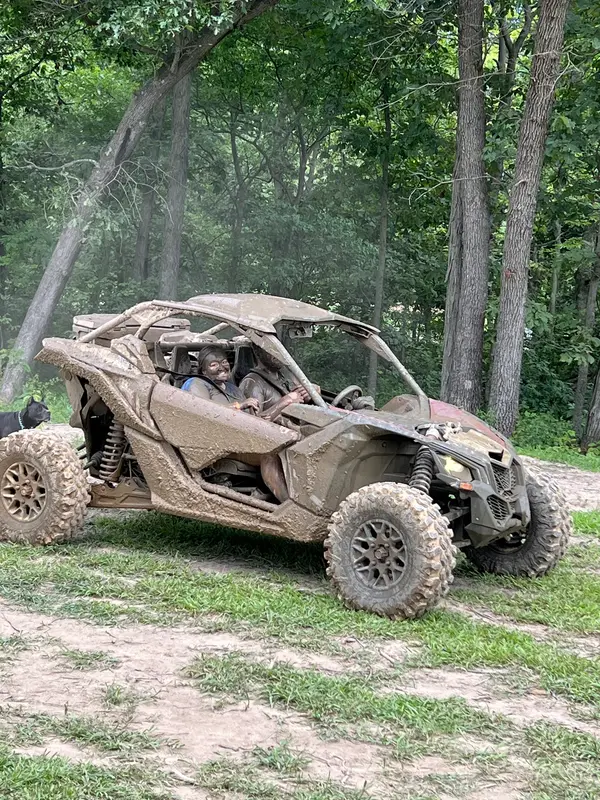
Missouri's off-road terrain is predominantly dirt, rock, and mud, particularly in the Ozark region. Riders should be prepared for rocky climbs, stream crossings, and potential mud sections; deep sand is less common.
Seasonal Trail Closures
Some trails, especially within the Mark Twain National Forest, may experience seasonal closures due to excessive wet conditions (mud season), hunting seasons, or conservation efforts. Always check current trail status before heading out.
Confirm current requirements with the state agency before your trip. Rules and fees change every season.
OHV Registration
ATVs, as Missouri law defines them, must be titled and registered with the Missouri Department of Revenue, which means obtaining a title and displaying a registration decal. Utility vehicles (UTVs) and recreational off-highway vehicles don't meet that ATV definition and are not titled or registered by the Department of Revenue.
Youth Operator Requirements
Operators under 16 years of age are prohibited from operating an OHV on public land unless under the direct supervision of an adult and operating an OHV appropriate for their age and size. Safety courses are recommended.
Safety Equipment
Missouri law requires a securely fastened safety helmet for any ATV operator or passenger under 18; adults aren't legally required to wear one, though it's strongly recommended for everyone. Eye protection is also highly recommended for all riders.
Spark Arrestor and Noise Limits
OHVs operated on public lands must be equipped with a U.S. Forest Service approved spark arrestor. Additionally, Missouri sets no specific statewide OHV decibel limit, state law requires only an adequate muffler and a Forest Service-approved spark arrester, so any sound-level cap comes from the rules of the agency that manages the land you're riding.
- 01
Step 1: Research and Select a Riding Area
Pick your ground first, an Ozark rock trail and a private mud park ask very different things of a machine. Match the area to your vehicle and skill level, then confirm hours, fees, and rules.
- 02
Step 2: Ensure OHV Compliance
Public-land riding means the machine must be registered with the Missouri Department of Revenue and meet all safety and equipment requirements. Sort the paperwork before the trailer gets loaded.
- 03
Step 3: Check Trail Conditions and Weather
Ozark trails change character with the rain. Check current trail status for closures due to mud, weather, or maintenance, and read the forecast before you commit.
- 04
Step 4: Prepare Your Gear and Vehicle
Run a pre-ride inspection, then pack like the creek crossings are real: helmet, first-aid kit, water, food, and navigation tools all earn their space.
- 05
Step 5: Understand Local Regulations and Etiquette
Every riding area carries its own rules: speed limits, right-of-way, environmental guidelines. Learn them before the first mile so the day stays safe and the access stays open.
01How many off-road parks are in Missouri?
02Is OHV registration required to ride in Missouri?
03Are helmets mandatory for OHV riding in Missouri?
04What kind of terrain can I expect on Missouri's off-road trails?
05Can children operate OHVs on public trails in Missouri?
06Are there any noise restrictions for OHVs in Missouri?
07Where can I find maps of off-road trails in Missouri?
Free tools
Your free outdoor toolkit

Everything Map
Listings, trails, spots, clubs and public land on a single full-screen map. Switch layers on and off, then tap any point for the details.
Open Everything MapTrail Explorer
Browse a community map of named trails with distance, difficulty, and where each one starts.
Open Trail ExplorerRoute Planner
Drop stops on a map and watch distance and drive time add up. Export a GPX or share the link.
Open Route PlannerOff-Road Clubs
Browse local clubs with meeting info and how to join, or start your own for free.
Open Off-Road ClubsGear Checklists
Printable, save-as-you-go packing lists. Tick items off and pull them up on your phone.
Open Gear ChecklistsMaintenance Schedules
Pick your equipment and get its full service schedule. Add your usage to turn intervals into dates.
Open Maintenance Schedules


Keep exploring