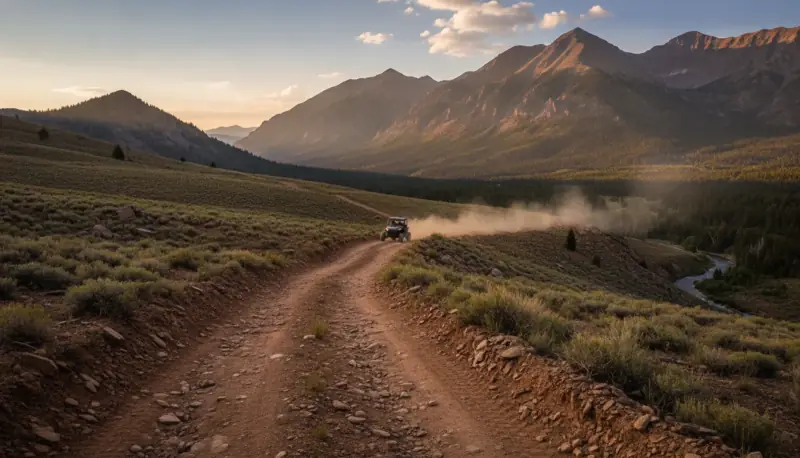
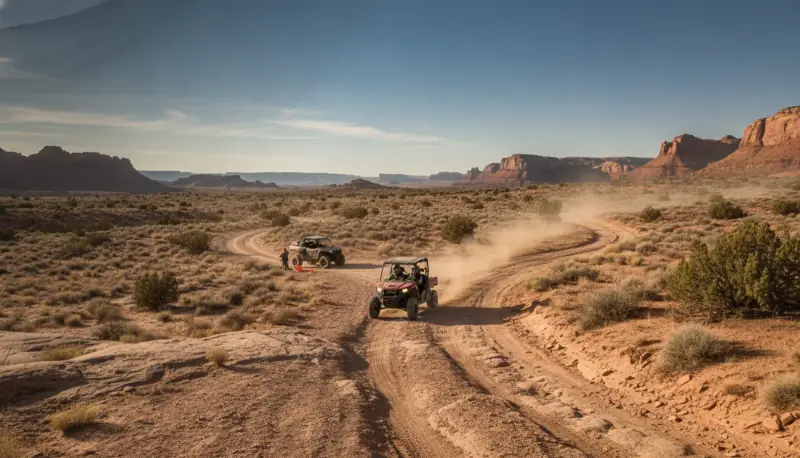
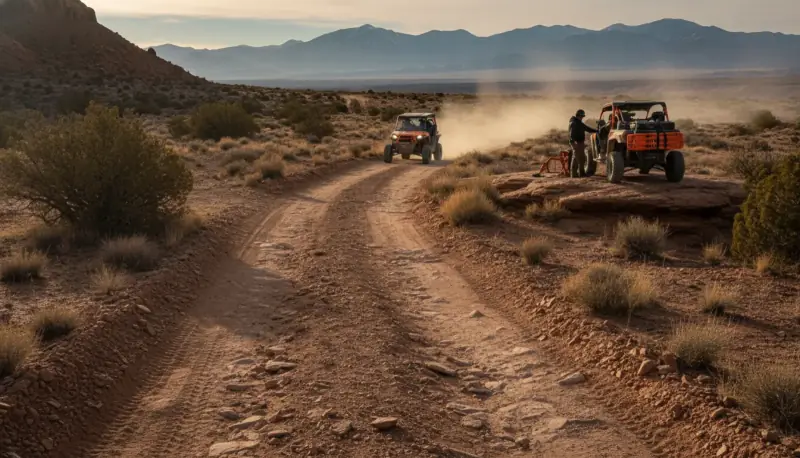
Texas delivers some of the most diverse off-road terrain in the country, anchored by large privately operated parks that span the technically demanding limestone and cedar of the Hill Country, the pine-forest trails of East Texas, and the granite rock gardens around Mason. Hill Country and granite riding reward tight line selection and suspension tuning, while the bigger forest parks test navigation skills and endurance across miles of mixed terrain. The state's OHV culture is well-established: operators have been running trails here for decades, and that experience translates into well-maintained infrastructure, clear trail systems, and seasonally predictable conditions.
Hill Country's Technical Single-Track and Moderate Terrain
The Hill Country (the limestone plateau country stretching west of Austin and San Antonio, with its off-road heart around Blanco, Burnet, and Llano counties), is the crown jewel of Texas technical riding. Trails here alternate between tight limestone sections with sharp exposure and broader ranch roads through cedar and oak. The limestone bedrock creates natural ruts and stepped terrain that demands accurate line choice and suspension compliance, making Hill Country a proving ground for beginners stepping up from flat park loops.
The terrain changes dramatically with rainfall. Dry conditions reveal clean rock and solid line visibility; wet periods create clay-heavy traction zones and occasional impassable creek crossings. Most Hill Country parks maintain both easier ranch-road circuits (suitable for stock suspension and trail tires) and expert-only rock-crawl sections where underbody protection and locking differentials become mandatory.
Vehicle choice matters: Jeep Wranglers and trail-width UTVs thread the tight switchbacks better than full-width machines. Skill progression here moves faster than at wider desert parks because the terrain forces constant input and quick decision-making. Plan for 2–4 hour sessions, fatigue sets in quickly on technical terrain.
Flagship Operator Parks: Hidden Falls, Barnwell Mountain, and Katemcy Rocks
Texas' marquee OHV destinations are privately operated parks, not public desert, and they run on three very different models, so know before you trailer:
| Park | Where | Terrain | Access model |
|---|---|---|---|
| Hidden Falls Adventure Park | Marble Falls (Hill Country) | ~3,000 acres, 240+ miles of difficulty-rated trails over limestone and granite | Day-use passes; open to 4x4s, ATVs, SxS, and dirt bikes |
| Barnwell Mountain Recreation Area | Gilmer (East Texas, ~120 mi east of Dallas) | 1,800+ acres of pine-forest trails, mellow dirt to hardcore rock climbs, plus dedicated dirt-bike single-track | Day-use; camping, showers, RV hookups, cabins on site |
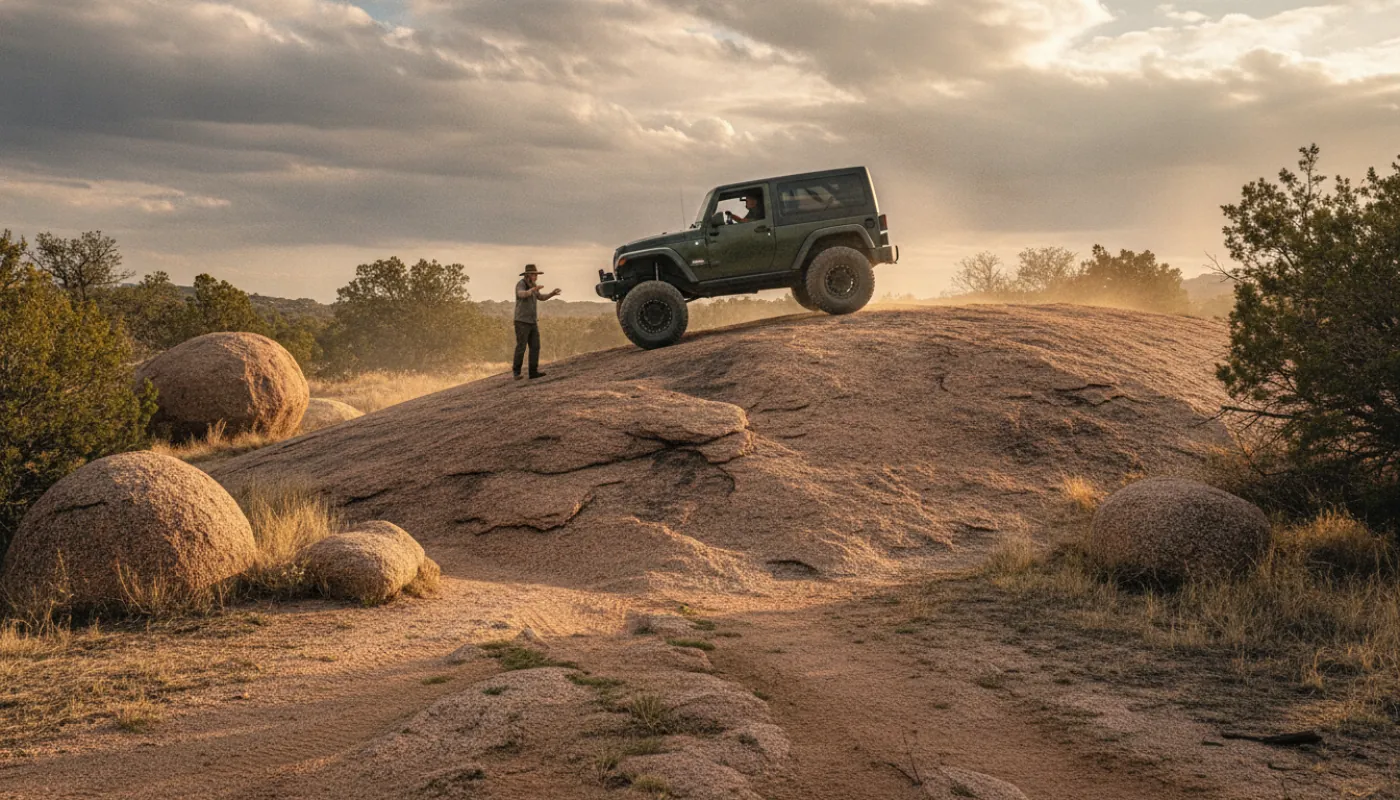
| Katemcy Rocks | Mason ("the Moab of Texas") | 800+ acres of granite domes and steep technical crawl lines | Event weekends only, a private working ranch, not a show-up-Saturday park |
Hidden Falls is the biggest and most platform-diverse of the three: its difficulty-graded network lets a mixed group of Jeeps, side-by-sides, and dirt bikes each find appropriate lines from the same staging area. Barnwell's forest trails reward momentum and reading subtle terrain transitions that aren't visible until you're meters away, and its purpose-built dirt-bike single-track is the best in East Texas. Katemcy's granite is the state's premier rock-crawling venue, but plan around it: the gates open on scheduled event dates (typically $50–$70 per rig for a weekend), night wheeling is prohibited, and the terrain and events are built around 4x4s, showing up unannounced on a random Saturday finds a locked gate on a working ranch.
Many riders make a multi-day trip of the big parks: day one acclimates to the trail map and difficulty ratings, day two covers the moderate network, day three tackles the harder rock. Heat is the real seasonal hazard, Texas temperatures regularly exceed 95 degrees May through September, so bring recovery gear, more water than you think, and ride within posted rules. Recovery help is usually close at these managed parks, but cellular coverage still drops out deep in the trail systems.
Seasonal Windows, Passes, and the Texas OHV Decal
Texas OHV riding is largely year-round, with the clearest windows in fall and spring: October–November and March–April deliver 70–80 degree days and lower humidity, mid-winter cools to highs in the 50s and 60s (still eminently rideable), and summer is possible but unforgiving past 95. Heavy rain can close parks for days as limestone and clay turn greasy; extended dry spells firm the rock up and make technical lines more predictable. Always contact park management or check conditions pages before trailering, a four-hour drive to a gate closed for weather is a common loss.
Access itself runs through each operator's own pass system, but don't confuse the park pass with the state's requirement:
- Park passes. Hidden Falls and Barnwell sell day-use (and in some cases annual) passes, often bundled with camping and facilities. Katemcy sells per-event weekend passes only.
- The TPWD Texas OHV decal. Venues on the state's OHV-program lands, Barnwell Mountain among them, require every off-road vehicle to display a current Texas OHV decal (about $17, sold on site or through TPWD). Budget for it; arriving without one means buying it at the gate or being turned away.
- House rules vary and are enforced. Helmet and age requirements, night-riding policies, and engine-size restrictions differ park to park, research before you commit a weekend, especially with younger riders.
Choosing Your Vehicle and Essential Prep
Vehicle selection for Texas depends on your chosen terrain. Hill Country and granite technical riding favor smaller, nimble platforms: stock Wranglers and trail-width UTV builds navigate tight spots easily, and locking differentials plus 35-inch tires represent the typical upgrade ceiling, going larger forces compromises in articulation and visibility. The bigger forest parks flip the calculus: wide stance, long-travel suspension, and big power shine on fast trails and step-up obstacles. Modern high-output sport side-by-sides, currently spanning roughly 135 to 240 horsepower across trims, carry momentum through mixed terrain far better than smaller machines, with the long-travel suspension soaking up the whoops.
Prep for a Texas park trip is a short, non-negotiable list:
- Fluids, belt, and fuel system checked before every visit, granite and limestone punish deferred maintenance
- Tire pressure matched to terrain, high-pressure road settings won't grip loose dirt or rock
- Water beyond what you think you need, May through September especially
- Recovery basics: kinetic rope or winch, shovel, tire repair kit, basic hand tools
- A second vehicle or riding partner for the remote trail systems; "there's always someone nearby" fails exactly when you need it, and solo riding multiplies every risk
Difficulty Progression From Beginner to Advanced
Texas parks welcome riders at every skill level, but progression matters. Beginners should start on the wide, low-speed, forgiving green-rated trails most parks maintain, Hidden Falls and Barnwell both separate easy loops from the harder lines. These circuits build clutch control, line reading, and confidence without exposure risk. After 3–5 days of green-trail time, stepping into moderate technical terrain (rocky sections with small obstacles, easier crawls), becomes safe. Your body will tell you when you're ready: tired feet and arms signal you're working harder than the terrain demands, which means you're overdriving it.
Intermediate riders tackling Hill Country or granite technical trails should invest 4–6 sessions learning each park's specific lines and hazards before attempting back-to-back days. Advanced riders chasing rock-crawl challenges or multi-day trips should travel with a second vehicle for recovery and file a loose itinerary with someone off-site. The transition from intermediate to advanced isn't about speed: it's about reading terrain under fatigue, recovering from small mistakes without panic, and managing risk across long exposure windows. Most riders spend a season or two in intermediate terrain before safely enjoying the hardest parks. Rushing that progression is how incidents happen.