Off-Road Parks · Utah
Off-Road Parks in Utah
Ride 28 parks across Utah. Maps, hours, contact info, photos, and verified operator profiles, all in one place.
Mighty Five national parks plus the Wasatch and the Uintas.
About Utah
Best time to go
When to ride in Utah
April through October. Winter belongs to the Wasatch.
- October–April: cool temperatures and prime desert riding
- Summer: dangerous heat, so avoid midday desert riding
- Holiday weekends are extremely busy at the big dunes
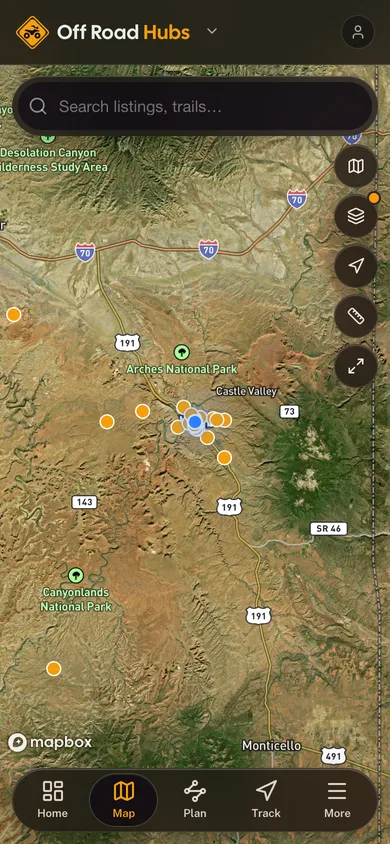
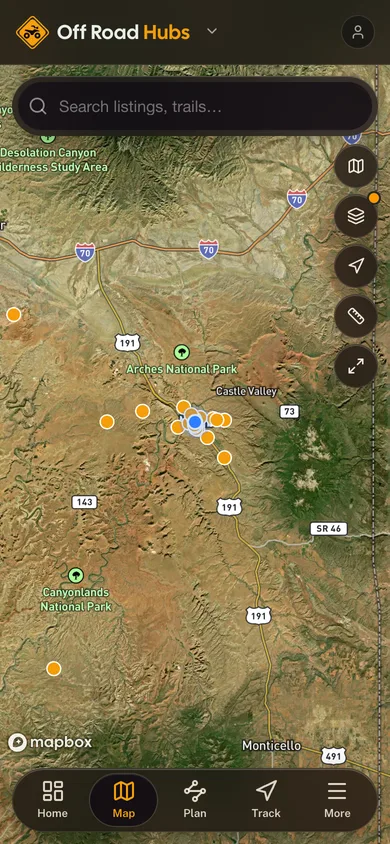
28 on the map
Tap a pin to open its profile.
Quick facts
- Trails mapped
- 502
- Parks listed
- 28
- Best season
- April through October
All listings
28 parks
across Utah
Watch it live
Live webcams in Utah
 Location
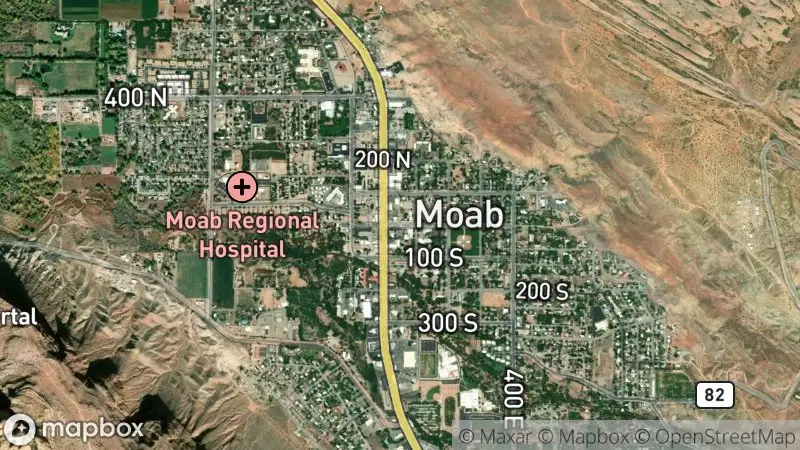
Moab Colorado River & Red Cliffs Cam
via AllTrips AllMoab
Watch livePlan your trip
Plan your trip to Utah
OHV Registration and Permits
All off-highway vehicles (OHVs) operated on public lands in Utah must be registered. Non-residents are required to purchase a non-resident OHV permit, which contributes to trail maintenance and signage.
Public vs. Private Land Access
The majority of off-road riding in Utah occurs on public lands managed by agencies like the BLM and USFS. Always stay on designated trails to respect land ownership and protect sensitive ecosystems. Private land requires explicit permission from the owner.
Sound and Spark Arrestor Rules
Utah law requires all OHVs to be equipped with a properly functioning spark arrestor to prevent wildfires. Sound limits are also enforced to minimize noise pollution; verify current decibel limits with the state agency.
Terrain Variety
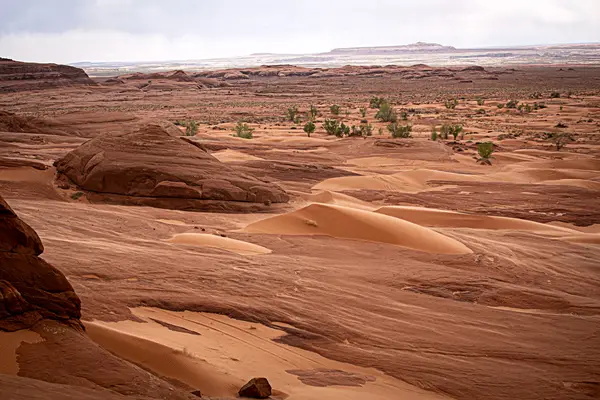
Utah's terrain ranges from deep sand dunes and loose dirt trails to technical slickrock and muddy mountain paths. Research your chosen area to understand the predominant terrain and prepare your vehicle and skills accordingly.
Seasonal Trail Closures
Many mountain trails are subject to seasonal closures due to snow, mud, or wildlife migration. Fire restrictions are common in summer and fall, prohibiting campfires and sometimes limiting OHV use in certain areas. Always check current conditions before heading out.
Confirm current requirements with the state agency before your trip. Rules and fees change every season.
Non-Resident OHV Permit
Non-residents operating an OHV in Utah must obtain a non-resident OHV permit. This permit helps fund trail maintenance, signage, and enforcement efforts. It is required for all off-highway vehicles, including dirt bikes, ATVs, UTVs, and snowmobiles.
OHV Education Requirements
Since 2023, every OHV operator on Utah public lands must hold an OHV education certificate, a youth certificate for anyone under 18 and an adult certificate for those 18 and older. Riders under 8 years old are restricted from operating OHVs on public lands, except on private property with owner permission.
Spark Arrestor and Muffler
All OHVs operated in Utah must be equipped with a U.S. Forest Service approved spark arrestor in good working condition. Additionally, vehicles must have a muffler that keeps exhaust noise within legal decibel limits to prevent environmental disturbance and comply with state law.
Operator Age and Safety Gear
Operators under 18 years of age are required to wear an approved helmet when riding an OHV. Eye protection is also highly recommended for all riders. Specific age restrictions apply to different classes of OHVs, so verify the requirements for your machine type.
- 01
1. Research Your Destination
Pick a region or trail system that fits your ability and the terrain you want: slickrock, dunes, or mountain two-track. Trail maps, local guides, and online resources will tell you what the routes actually demand.
- 02
2. Obtain Necessary Permits and Registration
Non-residents need a Utah non-resident OHV permit before riding, get it sorted in advance. Confirm your machine is properly registered in your home state and carries all required safety equipment.
- 03
3. Prepare Your Machine and Gear
Go through the OHV front to back: tires, fluids, brakes, safety equipment. Pack tools, spare parts, a first-aid kit, and enough water and food for the trip plus a margin; Utah's backcountry doesn't forgive light packing.
- 04
4. Understand and Adhere to Regulations
Know the state's rules on spark arrestors, sound limits, age restrictions, and designated-trail riding before you turn a wheel. Honor seasonal closures and fire restrictions, they exist for reasons that become obvious out there.
- 05
5. Inform Others of Your Plans
Tell someone your route, your expected return, and who's in your group, every trip. Much of Utah's best riding sits far outside cell coverage, so a satellite communicator is worth carrying.
01Do I need a special permit to ride my OHV in Utah if I'm from out of state?
02What is the best time of year to go off-roading in Utah?
03Are there trails suitable for beginners in Utah?
04Can I rent an OHV in Utah?
05What safety equipment is required for OHV riders in Utah?
06Are there any age restrictions for operating OHVs in Utah?
Free tools
Your free outdoor toolkit

Everything Map
Listings, trails, spots, clubs and public land on a single full-screen map. Switch layers on and off, then tap any point for the details.
Open Everything MapTrail Explorer
Browse a community map of named trails with distance, difficulty, and where each one starts.
Open Trail ExplorerRoute Planner
Drop stops on a map and watch distance and drive time add up. Export a GPX or share the link.
Open Route PlannerOff-Road Clubs
Browse local clubs with meeting info and how to join, or start your own for free.
Open Off-Road ClubsGear Checklists
Printable, save-as-you-go packing lists. Tick items off and pull them up on your phone.
Open Gear ChecklistsMaintenance Schedules
Pick your machine and get its full service schedule. Add your hours to turn intervals into dates.
Open Maintenance Schedules

Keep exploring